Werckmeister Harmonies: Order vs. Chaos
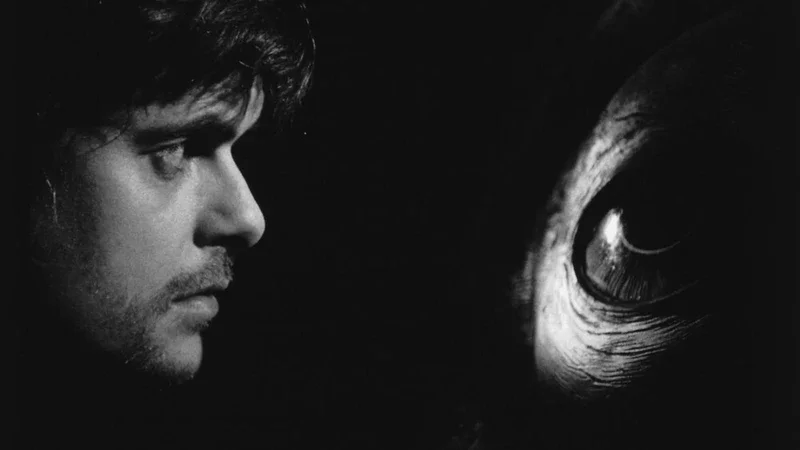
The world is dark and silent. As witnesses in its shadow our place is constantly uncertain. We shift like planets through space, connected by an invisible force, searching for our sun. What, in the end, keeps us from falling apart?
How does societal collapse unfold itself? What signals its arrival? Werckmeister Harmonies paints a picture of possibilities for us: whispers of discontent on the streets, a town’s incomprehensible fascination with a dead whale or a mysterious nihilistic figure fueling collective resentment and instability. The people seem desperate to latch onto anything that might ascribe meaning to their lives. Still, their inevitable seduction into violence comes unexpected.
Long takes of empty streets and empty squares slowly get exchanged by the marching of a growing crowd. They move in a slow, unified manner, collectively carrying their abstract anger with shared momentum. Faces blur into one another; no voice rises above the rest. What remains is not anger in its sharp, explosive manner, but an exhausted, directionless hunger for destruction. Like sleepwalkers who have all stumbled into the same dream, they move forward without hesitation. Drifting towards the hospital, they open its doors by force. Beds are overturned, curtains torn aside, bodies exposed. Who takes responsibility for such cruelty?
Can anyone become violent? Some might say so, under suitable circumstances. When old beliefs collapse, people can become vulnerable to manipulation. We witness ordinary people with a compulsive need to uncover something, anything, that might answer the dull, gnawing absence within them. Werckmeister Harmonies shows us how fragile order is — and how easily humans drift into chaos when meaning collapses.
