L’eclisse: Caught between Fear and Desire
In an age defined by technological excess, communication has never been more abundant — nor more suspect. We talk endlessly, yet hesitate to reveal anything real; words multiply, though meaning withers. Beneath this reluctance lies a deeper estrangement: we are no longer fluent in the language of our inner lives.
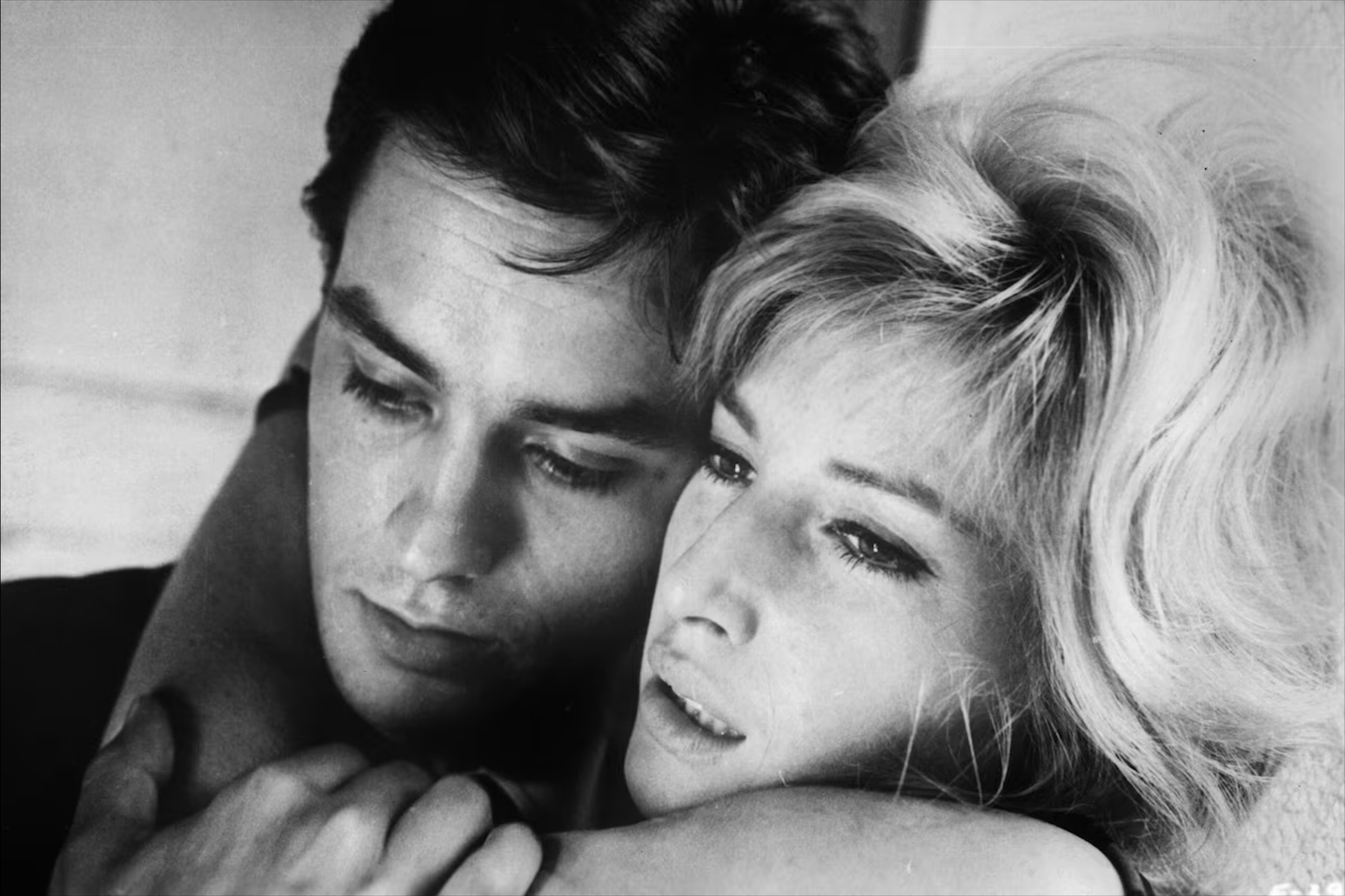
Antonioni’s lens moves through the modern world like a quiet observer of its silent mysteries. In L’eclisse a man and a woman meet in an environment of inexpression. Immense buildings and empty streets frame their everyday existences. They seem adrift in this alien space, in these surroundings that dominate them constantly. Still, a fragile romance takes shape: they circle one another like moths to a flame, caught between fear and desire.
They always meet at the same spot: under a tree on the corner of the street, closely situated near a building under construction, surrounded by modern housing developments. Their emotional obstacles seem as tall and impenetrable as the concrete walls around them. They barely speak, yet observe each other endlessly.
A brooding anxiety permeates their relationship. Though they meet up again and again, continuously reaching for intimacy, they can never quite connect. Their fear is a fear of the future, of possibility itself, of finding an emotional connection that requires honesty and vulnerability. Their story simply ends with a failure to commit; they never meet up again. We watch the empty street, the construction site, the modern buildings, the streetlights, the passersby; life cautiously continues, dissolving presence into absence. The wind blows on. We move on too.
Ours is an age of soft evasions. Rather than facing the contradictions that define us — the desires we cannot name, the fears we cannot settle —we distract ourselves, with noise, with pleasure, with anything that refrains us from turning inward. Fear permeates even our most intimate exchanges. What appears as a failure between people is, more fundamentally, a failure within the self: a refusal, or perhaps an inability, to articulate one’s own interiority.
In this sense, we are all escapists—not dramatically, but habitually. Distraction becomes a quiet form of self-denial.
